
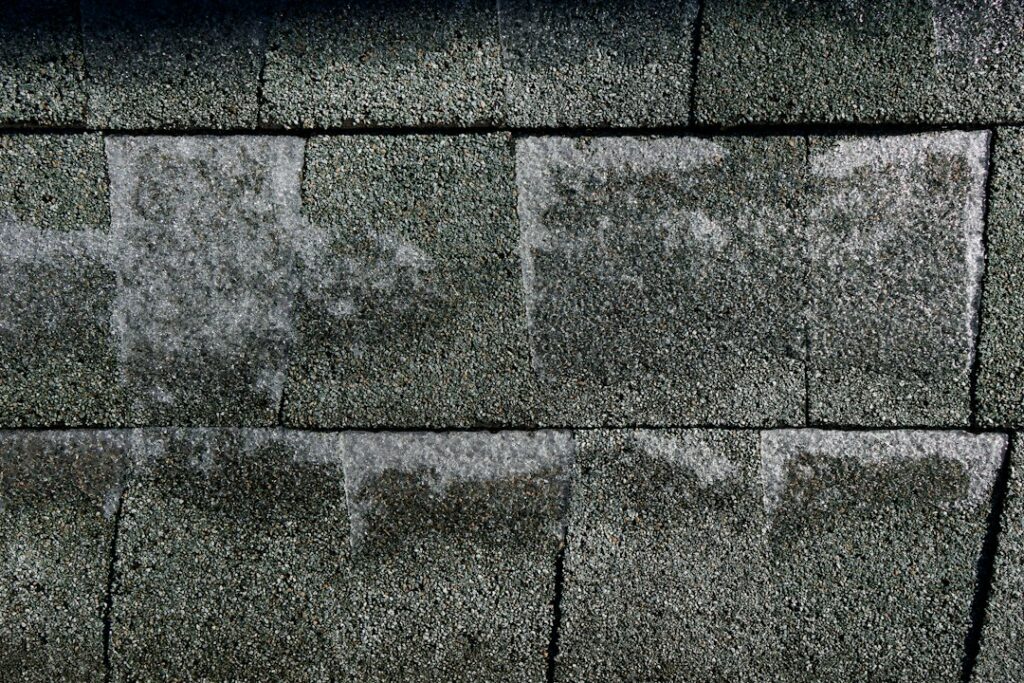
What do mold and mildew on a roof look like?
Mold and mildew usually appear as irregular dark, green, gray, brown, or black growth on roofing materials. They may form in streaks, patches, clusters, or thin films, especially where shingles stay damp for long periods.
On a roof, the terms are often used interchangeably, although they describe related fungal growth rather than exactly the same thing. Mildew commonly appears as a lighter, powdery, or surface-level coating. Mold may look thicker, darker, or more deeply embedded. A visual inspection can suggest a problem, but color alone cannot identify the exact type of growth.
Common signs include:
- Black or dark green streaks running down shingle surfaces
- Fuzzy, blotchy, or raised patches
- Green film in shaded areas
- Brown or gray discoloration around roof edges
- Growth concentrated beneath overhanging branches
- Damp-looking areas that remain discolored after the roof dries
- Moss mixed with a soft, carpet-like layer of growth
Not every dark mark is mold or mildew. Asphalt shingle granule loss, tree sap, rust from metal components, dirt, and ordinary weathering can create similar staining.
Why is roof growth common in Boonville?
Boonville, NY has seasonal conditions that can allow roof surfaces to remain wet for extended periods. Snow, spring rain, summer humidity, falling leaves, and shaded roof sections can all contribute to moisture buildup.
Roof growth is more likely when:
- Trees block sunlight and air movement
- Leaves collect in valleys, along eaves, or behind roof features
- Gutters overflow or remain packed with debris
- Snow sits against shaded sections
- Roof surfaces face north or remain shaded by nearby structures
- Attic ventilation is inadequate
- Shingles are aging and holding moisture more readily
Moisture is the central factor. Mold and mildew do not usually appear simply because a roof is old. They develop when water, shade, organic debris, and limited drying time occur together.
How can you tell mold or mildew from moss and algae?
Mold and mildew are often confused with algae and moss, but the growth patterns are different.
Algae commonly produces flat black, blue-green, or dark brown streaks. It may spread across shingle surfaces without creating a raised texture.
Moss is usually thicker and more three-dimensional. It can look like a green cushion or mat and may grow outward from shingle edges. Moss can lift shingles as it develops underneath them.
Mildew tends to look like a thin, powdery, or filmy coating. It may be white, gray, pale green, or light brown.
Mold may appear as darker, irregular patches with a fuzzy, smeared, or layered appearance. It can also develop on roof sheathing, rafters, and attic insulation rather than only on the exterior roof.
These categories can overlap, and a roof may have more than one type of growth at the same time. The practical concern is whether the growth is holding moisture, damaging roofing materials, or indicating a ventilation or drainage problem.
Can roof mold be seen from the ground?
Often, yes. A ground-level inspection can reveal streaking, patches, moss, or areas of discoloration without anyone climbing onto the roof. Binoculars can make the inspection more useful while keeping the observer safely on the ground.
Look for:
- Dark streaks that follow the slope of the roof
- Uneven discoloration between shaded and sunny sections
- Moss along shingle edges
- Debris trapped in valleys
- Sagging gutters or areas where water appears to overflow
- Shingles that look lifted, curled, cracked, or unusually soft
A ground inspection cannot show everything. Mold may be hidden beneath leaves, around flashing, under roof penetrations, or on the underside of the roof deck. It may also be present in the attic without being visible from outside.
What does roof mold look like inside the attic?
Attic mold often appears as dark spotting, gray or black staining, or fuzzy patches on roof sheathing and wooden framing. It is most likely to develop near the eaves, ridge, roof valleys, bathroom exhaust areas, or places where warm indoor air meets cold roof surfaces.
Signs that deserve attention include:
- Musty odors
- Dark marks on the underside of roof decking
- Damp or compressed insulation
- Rusted nails or metal fasteners
- Frost on roof sheathing during winter
- Water stains around vents, chimneys, or other roof openings
- Condensation on the underside of the roof

Attic mold is not always caused by a roof leak. In cold weather, warm moist air from the living space can rise into the attic and condense on cold wood. Bathroom or kitchen exhaust that terminates in the attic can create similar moisture problems. Poor ventilation may allow that moisture to remain trapped.
Is roof mold dangerous?
Small areas of surface growth do not automatically indicate an indoor health emergency, but mold should not be ignored. Spores can enter the living space through air movement, attic openings, ductwork, or disturbed insulation. People with asthma, allergies, respiratory conditions, or weakened immune systems may be more sensitive to mold.
The greater roof-related concern is often moisture damage. Persistent dampness can contribute to:
- Shingle deterioration
- Loss of roof granules
- Rot in roof decking or framing
- Corrosion of metal components
- Insulation damage
- Interior ceiling or wall stains
- Reduced effectiveness of attic insulation
Avoid disturbing a large or heavily established area without suitable protective equipment. Moldy insulation, contaminated attic materials, and extensive water damage may require specialized handling.
Can roof mold be removed safely?
Small amounts of exterior discoloration may sometimes be addressed with careful, manufacturer-compatible cleaning methods. Scrubbing shingles aggressively, using a pressure washer, or walking on wet or steep roofing can cause damage and create a serious fall hazard.
Pressure washing is particularly risky because it can remove protective granules and force water beneath shingles. Household bleach or strong cleaning chemicals can also damage plants, siding, metal surfaces, and roofing materials if used incorrectly.
Safe observation from the ground is usually the appropriate first step. If the roof is steep, icy, snow-covered, fragile, or difficult to access, climbing onto it creates more risk than useful information. Any inspection involving an attic should also account for weak ceiling surfaces, exposed nails, poor lighting, and electrical hazards.
How can future growth be reduced?
Mold and mildew are less likely to return when roof moisture is reduced. Useful maintenance includes:
- Keeping gutters and downspouts clear so water drains away from the roof
- Removing leaf buildup from valleys and roof edges when it can be done safely
- Trimming branches that block sunlight or rub against shingles
- Watching for ice dams and winter condensation
- Checking that bathroom and kitchen exhaust vents discharge outdoors
- Maintaining reasonable attic airflow without blocking soffit vents
- Replacing damaged flashing or deteriorated roof components
- Monitoring areas that remain shaded and damp after storms
Roof stains may disappear temporarily after cleaning but return if the underlying moisture condition remains. Recurring growth is therefore a useful warning sign, not merely a cosmetic issue.
When does roof growth require closer evaluation?
Closer evaluation is warranted when growth is spreading, shingles are lifting, the attic smells musty, water stains appear indoors, or roof decking looks soft or discolored. The same applies when mold is found near insulation, electrical wiring, or heating equipment.
For residents in Boonville, seasonal checks are especially useful after snowmelt, heavy spring rain, and periods of warm weather following prolonged dampness. A simple ground-level review can identify changes early and help distinguish ordinary staining from a developing moisture problem.
