
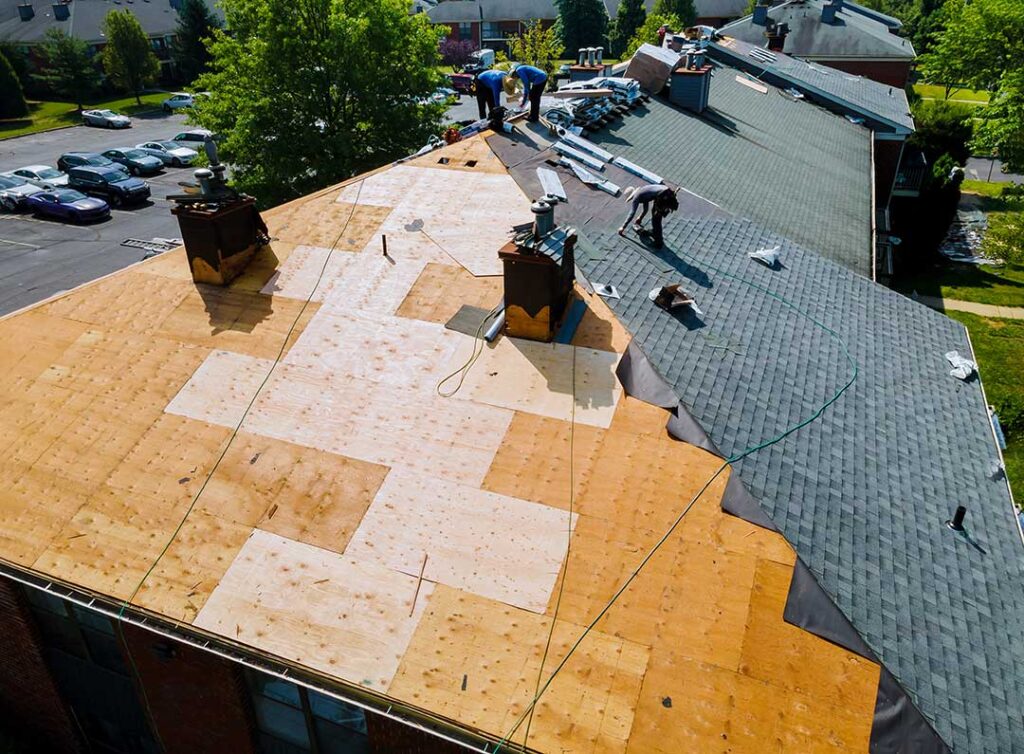
What does regular roof maintenance actually prevent?
Regular roof maintenance helps identify small problems before they become interior leaks, structural damage, or premature roof replacement. For households in Boonville, NY, routine attention is especially useful because roofs must handle snow, ice, wind, heavy rain, and repeated freeze-thaw cycles.
A roof rarely fails all at once without warning. More often, damage develops gradually:
- A lifted shingle allows water beneath the roof covering.
- A small flashing gap lets moisture reach the attic or wall cavity.
- Blocked drainage leaves water standing near roof edges.
- An unsealed pipe boot allows a slow leak that may remain hidden for months.
- Repeated ice buildup strains shingles, gutters, and roof edges.
Maintenance does not make a roof indestructible, but it can make problems easier to detect, less expensive to correct, and less disruptive to the household.
Why is seasonal weather hard on local roofs?
The main challenge is not one dramatic storm. It is the repeated cycle of moisture, freezing, thawing, and refreezing.
During winter, snow can place sustained weight on the roof, particularly where snow drifts collect near changes in roof height, dormers, valleys, or roof-to-wall intersections. Ice can also form along eaves when heat escapes into the attic and melts snow from below. If the melted water refreezes at a colder roof edge, an ice dam may develop and interfere with drainage.
Spring brings a different set of concerns. Snowmelt and rain can expose damaged flashing, clogged gutters, loose shingles, and deteriorated sealants. Windstorms may leave roof coverings slightly displaced without creating an obvious opening from the ground.
Summer heat and strong sunlight can dry or crack aging materials. Heavy thunderstorms may test flashing, drainage paths, and attic ventilation. Autumn leaves and small branches can collect in valleys and gutters, increasing the chance of water backup before winter arrives.
How does maintenance extend roof life?
Maintenance extends service life by reducing the amount of time that moisture and weather exposure can affect vulnerable areas. A roof covering may still look generally sound while small defects are allowing water into underlying materials.
Early attention can help preserve:
- Shingles or other roof coverings
- Underlayment beneath the exterior surface
- Metal flashing around chimneys, walls, and roof penetrations
- Fascia and soffit materials
- Roof decking
- Attic insulation and framing
- Gutters and downspouts
A loose shingle may be a limited repair when discovered promptly. If water reaches the decking and framing, the repair can become more involved. The same principle applies to flashing: a small separation is usually easier to address than saturated wood or stained interior finishes.
Routine maintenance also helps identify when a roof is approaching the end of its useful life. Knowing this in advance gives a household more time to plan for future work rather than reacting to an emergency leak during winter weather.
Which roof areas deserve the closest attention?
Some parts of a roof experience more stress than broad, unobstructed slopes. These areas deserve particular attention during inspections:
Valleys
Valleys collect water, snow, leaves, and debris from two roof planes. Damaged or poorly draining valleys can direct moisture beneath the roof covering.
Flashing
Flashing protects transitions around chimneys, walls, skylights, vents, and other penetrations. Rust, lifted edges, open seams, or deteriorated sealant can create pathways for water.
Eaves and roof edges
Edges are vulnerable to ice buildup, wind uplift, and drainage problems. Gutter attachment points and the lower courses of shingles may show damage before other areas do.
Gutters and downspouts
A gutter system that cannot move water away from the roof can contribute to overflowing, fascia damage, basement moisture, and ice formation. Downspouts should discharge water far enough away from the foundation to avoid concentrating runoff beside the building.
Roof penetrations
Plumbing vents, exhaust vents, and other penetrations interrupt the roof surface. Their surrounding seals and flashing should be checked for cracking, movement, or gaps.
Can roof maintenance help prevent indoor damage?
Yes. Roof maintenance can reduce the likelihood of stained ceilings, wet insulation, mold growth, damaged wiring, and deteriorated wall or attic framing. It is not a guarantee against leaks, since severe weather and hidden defects can still cause problems, but it improves the chances of finding an issue before interior damage spreads.
Warning signs inside the home may include:
- Brown or yellow ceiling stains
- Peeling paint near upper walls
- Damp or musty attic odors
- Wet insulation
- Daylight visible through the roof decking
- Dripping or dampness after rain or snowmelt
- Frost or excessive moisture in the attic during winter
A stain does not always appear directly below the point where water entered. Roof framing can allow moisture to travel before it reaches a ceiling, so the visible mark may be some distance from the exterior defect.
How often should a roof be checked?
A practical maintenance schedule includes a visual check at least twice a year, commonly in spring and fall, along with additional checks after major wind, hail, or heavy snow events.
A basic schedule might include:
- Spring: Look for winter damage, displaced shingles, ice-related problems, and clogged drainage.
- Late summer: Check flashing, sealants, roof penetrations, and signs of heat or sun damage.
- Fall: Clear leaves and debris from drainage areas before snow and freezing conditions arrive.
- After severe weather: Look for missing shingles, exposed underlayment, damaged vents, and fallen branches.
Ground-level observation can reveal many issues, but walking on a roof can damage materials and create a fall hazard. Steep, wet, icy, or snow-covered roofs should not be accessed by untrained individuals. Electrical hazards, unstable ladders, and concealed roof damage also make some inspections unsafe.
What are common misconceptions about roof care?
One common misconception is that a roof only needs attention when it leaks. By the time water reaches a ceiling, the underlying problem may have existed for weeks or months.
Another misconception is that a new roof requires no maintenance. Newer roofs still depend on clear drainage, sound flashing, proper attic conditions, and protection from fallen branches. Maintenance is not only for older homes.
It is also a mistake to assume that all dark roof stains are harmless dirt. Some discoloration may indicate moisture, biological growth, or aging materials. At the same time, not every mark means the roof is failing. Observing changes over time and checking related areas provides better information than judging a single spot.
Finally, gutters should not be viewed as separate from the roof. They are part of the building’s water-management system. A roof may shed water properly, but blocked or poorly directed gutters can still cause damage around the eaves and foundation.
When does a roof problem require prompt attention?
Prompt attention is warranted when there is active leaking, exposed underlayment, a large area of missing roof covering, sagging, extensive storm damage, or water near electrical fixtures. Snow or ice removal from a roof can also be hazardous and may require specialized equipment and safety procedures.
For minor concerns, documenting the location and taking photographs from a safe position can help track whether the condition is changing. Interior stains, attic moisture, and exterior roof observations should be considered together because the visible symptom may not identify the actual source.
Regular maintenance is ultimately a form of risk management. It helps a household understand the roof’s condition, prepare for seasonal weather, and address manageable defects before they affect the rest of the building.
