
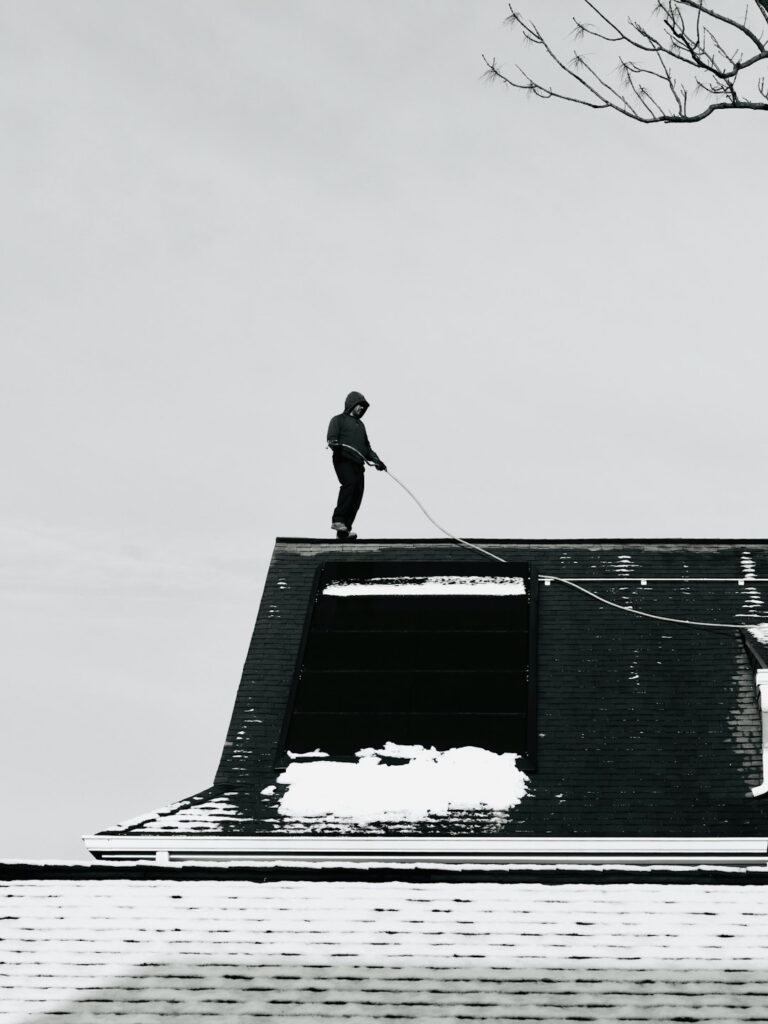
Cleaning a roof safely starts with recognizing that the roof itself may be the greatest hazard. In Boonville, NY, changing weather, spring moisture, autumn debris, snow, and freeze-thaw conditions can make roofing materials slippery and fragile. Many cleaning tasks can be handled from the ground, but climbing onto a roof should not be treated like ordinary household maintenance.
What should be cleaned from a roof?
Roof cleaning usually means removing leaves, twigs, moss, algae-like staining, and other debris that can hold moisture against roofing materials. It does not mean scrubbing every dark mark or trying to make an older roof look new.
A basic inspection from the ground can reveal:
- Leaves collecting in valleys or behind roof features
- Branches resting on shingles
- Moss growing along shaded, damp areas
- Granules collecting heavily in gutters or at downspouts
- Shingles that appear curled, cracked, lifted, or missing
- Water stains or sagging areas beneath roof edges
Some dark streaks are surface discoloration rather than dangerous growth. Scrubbing aggressively to remove them can shorten the life of asphalt shingles by loosening granules and damaging the surface.
Is it safe to walk on a roof to clean it?
For many homeowners, the safest answer is no. A roof can be unsafe even when it looks dry and has a gentle slope. Shingles may be brittle, hidden moisture can reduce traction, and roof edges, skylights, vents, and weak decking may not be obvious from above.
Avoid climbing when:
- The roof is wet, frosted, icy, or covered with snow
- Wind, rain, or rapidly changing weather is present
- The roof is steep, tall, heavily moss-covered, or difficult to access
- You cannot use proper fall-protection equipment
- The roof has damaged decking, loose shingles, or sagging areas
- You feel uncertain about ladder placement or movement on the surface
A ladder should never be placed on ice, snow, soft ground, or an unstable surface. Gutters are not designed to support a ladder, and leaning a ladder against them can cause damage or a sudden shift.
If safe access and fall protection are not available, clean from the ground and leave roof-surface work alone. A fall from even a one-story roof can cause serious injury.
How can a roof be cleaned from the ground?
Ground-level cleaning is often enough for light debris. Use a roof rake or soft extension tool designed for the task, and work from a stable position. Do not swing tools overhead near electrical lines, and do not pull on branches that may be caught under shingles.
For leaves and small twigs:
1. Stand well away from the roof edge.
2. Use a soft roof rake or long-handled brush.
3. Pull debris gently downward rather than scraping upward.
4. Stop if the tool catches on shingles, flashing, vents, or gutters.
5. Keep people and pets away from the area where debris may fall.
Do not use a metal rake, shovel, stiff broom, or sharp-edged tool on asphalt shingles. These tools can remove protective granules and expose the underlying material.
Branches touching the roof should not be yanked from below. They may be under tension, and pulling them can damage shingles or cause the branch to fall unpredictably.
What is the safest way to remove moss or roof staining?
Moss should not be pressure-washed or scraped aggressively. Its roots or holdfasts can remain attached to the shingle surface, and forceful cleaning may remove granules, break the shingle seal, or drive water beneath the roofing layers.
For light growth, a roof-safe treatment labeled for the specific roofing material may be applied according to its instructions. Treatments should be used cautiously near gardens, shrubs, ponds, pets, and storm drains. Protect nearby plants from runoff, and never combine cleaning chemicals.
A common mistake is assuming that stronger chemicals work better. Household bleach, acidic cleaners, and mixed solutions can damage roofing, siding, metal, vegetation, and painted surfaces. Bleach must never be mixed with ammonia or another cleaner because toxic vapors can form.
Moss may return if branches shade the roof and keep it damp. Trimming vegetation away from the roof, where safe and permitted, can improve drying. Do not cut trees or large limbs from a ladder or while standing on a roof.
Why should pressure washing usually be avoided?

Pressure washing is generally too aggressive for common asphalt-shingle roofs. The spray can strip granules, lift shingle edges, force water beneath the roofing, and damage flashing or sealant. It can also spread dirty runoff onto siding, windows, decks, and landscaping.
Low-pressure rinsing may be appropriate for some roofing materials, but the correct method depends on the roof’s age, condition, material, and manufacturer guidance. Clay, slate, metal, wood, and asphalt roofing do not respond the same way to water pressure or cleaning agents.
If water is used, keep the flow gentle and avoid directing it upward beneath shingle edges, around vents, or under flashing. Never use a pressure washer to compensate for unsafe access.
How should gutters and downspouts be handled?
Roof cleaning and gutter cleaning are related but separate tasks. Leaves removed from a roof often end up in gutters, where they can block drainage and contribute to ice buildup during cold weather.
Clean gutters only from a stable ladder placed on firm, level ground. Keep both hands available when climbing, and do not overreach sideways. Move the ladder instead of leaning beyond its safe reach.
After removing debris, check that downspouts discharge water away from the foundation. During autumn and spring, confirm that water is not overflowing behind the gutter or collecting near entrances, walkways, or basement walls.
Do not climb onto the roof to reach a gutter section that cannot be accessed safely from a ladder. A clogged gutter is a maintenance problem; a fall is an emergency.
When should roof cleaning be postponed?
Weather matters as much as the cleaning method. In the local climate, early spring can bring wet shingles, lingering ice, and unstable ground, while autumn may combine falling leaves with wind and rain. Summer roofs can become hot enough to soften sealants and make work uncomfortable or hazardous.
Postpone roof cleaning when:
- Rain is falling or expected soon
- Frost, ice, or snow is present
- Wind could move a ladder or drop branches
- The surface is damp from overnight condensation
- Temperatures are too cold for the cleaning product’s instructions
- Runoff could freeze on walkways or steps
A dry, calm day is generally safer, but good weather does not eliminate fall hazards.
What signs mean cleaning is not the main problem?
Roof cleaning will not correct structural or installation defects. Stop cleaning and reassess if you find widespread granule loss, exposed underlayment, cracked flashing, soft decking, repeated leaks, large areas of moss, or shingles that are curling and breaking.
Water stains on ceilings, damp attic insulation, musty odors, or daylight visible through the roof deck may indicate a leak. Covering the area with chemicals or brushing away the visible symptom will not solve the source.
For homes with steep roofs, fragile materials, significant growth, storm damage, or unsafe access, staying on the ground is the safest choice. Cleaning should never take priority over fall prevention or preserving the roof itself.
